Ask adults what money skill they wish they'd learned earlier, and one answer dominates every survey: saving. Not investing, not budgeting apps — the plain, unglamorous habit of keeping some money instead of spending all of it.
Here's the uncomfortable truth that makes this urgent: saving is not a fact you can teach. It's a muscle that only grows through repetition, and the muscle is far easier to build at eight — when the stakes are a $40 Lego set — than at twenty-eight, when the stakes are a rental bond and the habits are already set.
This guide covers the mechanics that actually work: why kids find saving hard, the goal structure that fixes it, and how to keep the habit alive when motivation dips.
Why saving is genuinely hard for kids (it's not a character flaw)
A child's brain discounts the future steeply — to a seven-year-old, next month barely exists. Behavioural economists call it present bias, and kids have it in concentrated form. Telling a child to "save for the future" is asking them to gift money to a stranger they haven't met.
Which gives us the design principle for everything that follows: make the future visible, near, and theirs. Every technique below is just that principle in different clothing.
Rule 1: Saving needs a target, not a sermon
"Save your money" fails. "Save for the $89 Lego Hogwarts set, which you chose" works. The difference:
- The goal is theirs. Chosen, not assigned. A child saving for your idea of a sensible goal is just deferring spending under instruction.
- The goal is visible. Print a picture. Stick it on the jar, or set it as the goal image in their savings app. Eyes on the prize is not a metaphor — it's the mechanism.
- The goal is reachable in weeks, not years. First goals should land in 3–8 weeks. A six-month goal at age nine is a motivation graveyard. As the muscle grows, the horizons stretch.
Rule 2: Show the progress bar
Progress you can see is the single strongest motivator in saving — it's the same psychology that makes video games compulsive. Engineer it:
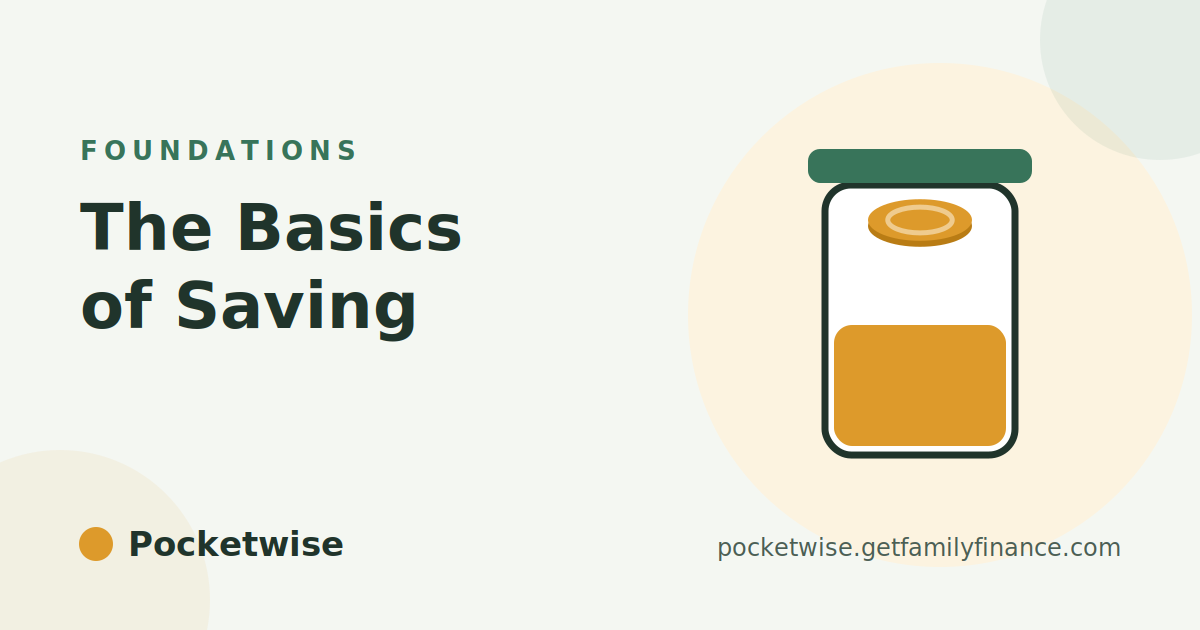
- Clear jars beat opaque money boxes. Watching the level rise is the point.
- A paper thermometer next to the goal picture, coloured in each payday, works absurdly well for ages 6–10.
- Savings apps with goal tracking take over from about age 10 — the good ones show exactly the same thermometer, digitally.
The maths conversation comes free: "You've got $36 of $89 — what fraction is that? How many more paydays?" Percentages, fractions, and division all sneak in the back door.
Telling a child to save for the future is asking them to gift money to a stranger they haven't met.
Rule 3: Pay the saver first (and consider matching)
Adults who save successfully almost all use the same trick: the saving happens automatically, before spending starts. Teach it from day one — the save portion of pocket money goes into the jar or savings bucket the moment money arrives, not "whatever's left on Sunday." Whatever's left is always zero.
Then consider the most powerful tool in the parental kit: the parent match. For every dollar your child saves toward their goal, you add 50 cents (or whatever rate suits). What this teaches, in order: compound-style growth ("my money makes more money"), the logic of employer retirement matching they'll meet later, and the sheer joy of watching a balance accelerate. A 50% match also quietly shortens those first goals into the motivational sweet spot.
Rule 4: Protect the spend money
Counter-intuitive but critical: a child with no free spending money becomes a worse saver, not a better one. If every dollar is locked toward goals, the first crack in discipline becomes a collapse — the financial version of a crash diet. The spend/save split (half spend, 40% save, 10% share is a fine default) exists so that fun money is legitimate, which makes the saved money safe.
And the inverse rule for parents: never raid the savings, and never bail out the spend jar. The entire system rests on the child trusting that saved money is genuinely theirs and that consequences are genuinely real.
US specifics: where the savings should live
- Interest is teachable again. After years near zero, high-yield savings accounts commonly pay 3.5–4.5% APY. For a kid, a custodial savings account at an online bank turns "money makes money" from theory into a monthly statement line you can point at.
- Custodial account basics: most US banks offer minor savings accounts jointly held with a parent; credit unions are often the friendliest. Look for zero fees and no minimum balance — fees on a child's $80 balance teach exactly the wrong lesson.
- The match has a famous big sibling. When you run a parent match, name it: "this is exactly how a 401(k) employer match will work at your first career job — and people leave thousands on the table by not taking it." You're pre-loading one of the most financially consequential habits in American working life.
- Kids' money apps like Greenlight digitise the whole system — automatic save-first splits, goal pictures and progress bars, and parent-paid interest on savings balances (effectively a built-in match) — useful from about age 10 when jars stop being cool.
When motivation dips (it will)
Around week three of any goal, enthusiasm sags. Three rescues, in escalating order:
- Recount the progress out loud. "You're 60% there" reframes the remaining slog as mostly-done.
- Add an earning sprint. A bonus job or two compresses the timeline and reconnects effort to the goal.
- Let them quit — properly. If the goal truly no longer matters, that's fine: the money moves to a new goal they choose. Quitting a goal teaches reassessment; raiding a goal teaches that saving is fake. The difference is everything.
From saving to the next lesson
Once your child has hit two or three goals, they've built the muscle — and they're ready for the two ideas that turn savers into wealth-builders: that money can earn money while you sleep (interest), and that starting early beats starting big (compounding). Both land far better on a child who has already felt a balance grow. That's the next post in this series — and the most life-changing maths a kid can learn.
Frequently asked questions
How do I motivate my child to save money?
Give the saving a target they chose, make progress visible (clear jars, thermometer charts, or app progress bars), and keep first goals reachable in 3–8 weeks. Kids don't save for 'the future' — they save for the $89 Lego set they picked, with a picture on the jar.
What is a parent savings match and should I use one?
For every dollar your child saves toward a goal, you add a set amount — commonly 50 cents. It teaches that money can grow, accelerates first goals into the motivational sweet spot, and pre-loads the logic of employer retirement matching they'll encounter as adults.
What percentage of pocket money should kids save?
A common default is 50% spend, 40% save, 10% share. Protect the spend portion — kids with zero fun money become worse savers, because the first lapse collapses the whole system. The split makes saved money safe by making spending legitimate.
Should I let my child give up on a savings goal?
Yes — properly. If a goal genuinely no longer matters, move the saved money to a new goal they choose. Quitting a goal teaches reassessment; raiding savings for spending teaches that saving is fake. Never raid their savings yourself, either.